
You Might Also Like
How to Choose the Right Upholstery Fabric for Sofas?
How to Choose the Right Upholstery Fabric for Sofas?
Your sofa fabric affects more than looks. It affects how long the sofa lasts, how it feels to sit on, and how much work you’ll put into cleaning it. Get the fabric wrong, and you’ll notice within a year. Get it right, and your sofa will still look good five years from now.
This guide walks through the practical side of choosing sofa upholstery fabric. No jargon, no sales pitch. Just what actually matters when you’re standing in a showroom or scrolling through fabric swatches online.
Whether you’re furnishing a new apartment, refreshing a family villa, or fitting out a commercial space, the right fabric choice comes down to a few honest questions: How will this sofa be used? Who’s sitting on it? And what’s your home’s climate doing to the fibres over time?
If you’re not sure where to start, many people in the region simply reach out to a sofa upholstery Dubai specialist and ask to see samples in person. Fabric looks different under showroom lighting than it does at home, so this step alone can save you from a costly mistake.
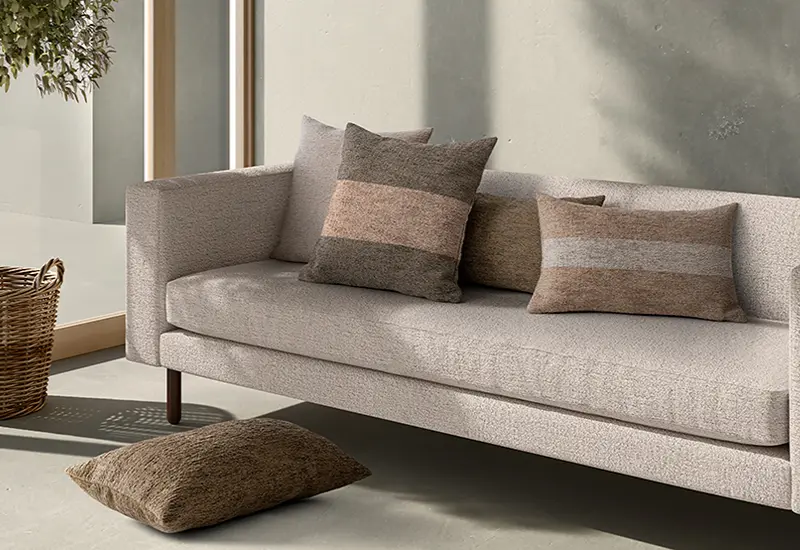
Start With Your Sofa’s Daily Use
Before you look at a single swatch, think about how the sofa gets used.
A sofa in a formal living room that hosts guests twice a month has very different needs than a sofa in a family room where kids eat snacks and the dog naps every afternoon.
Ask yourself:
- Is this a high-traffic sofa or an occasional-use piece?
- Do children or pets use it daily?
- Is it exposed to direct sunlight through a window?
- Will food or drinks be nearby often?
Your answers narrow the field fast. A delicate silk-blend fabric might be fine for a rarely-used guest sofa. It won’t survive in a household with toddlers and a cat.
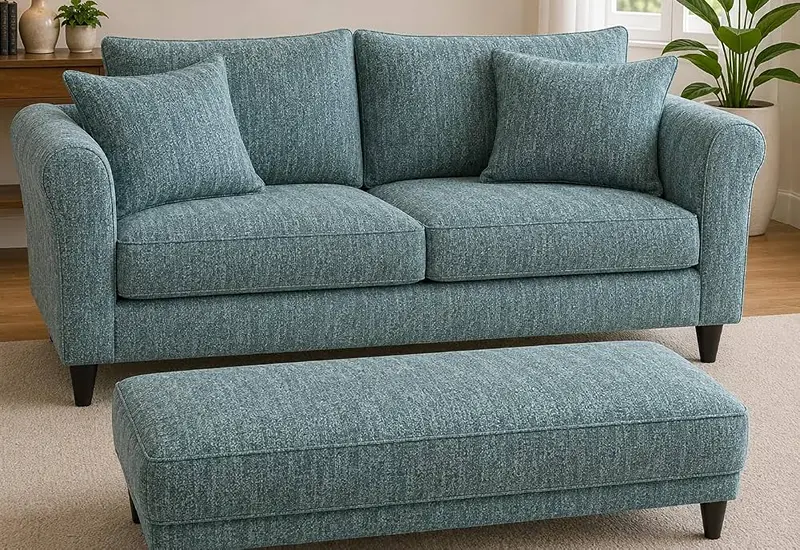
Know the Main Upholstery Fabric Types
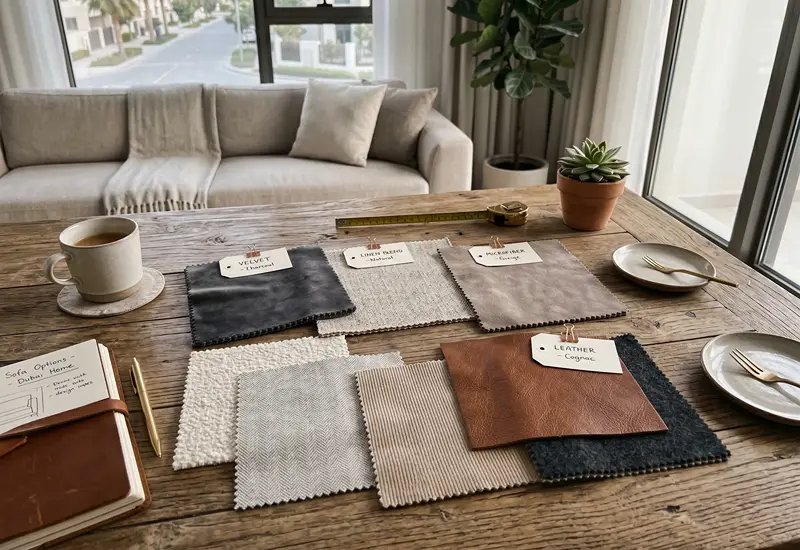
Sofa fabric generally falls into a handful of categories. Each one behaves differently once it’s on your sofa and in daily use.
Cotton
Cotton is breathable, soft, and takes colour well. It works nicely in cooler, air-conditioned rooms. The downside is that cotton wrinkles and stains easily, and it isn’t the most durable option on its own. It’s often blended with synthetic fibres to improve strength.
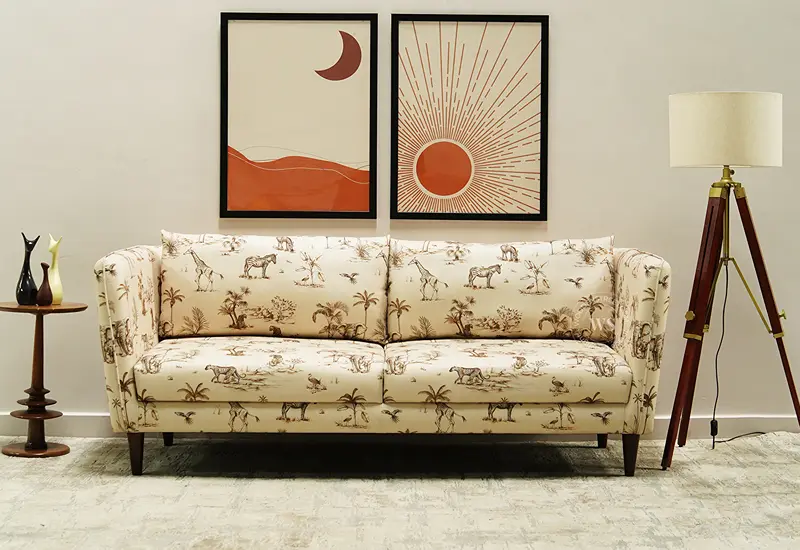
Linen
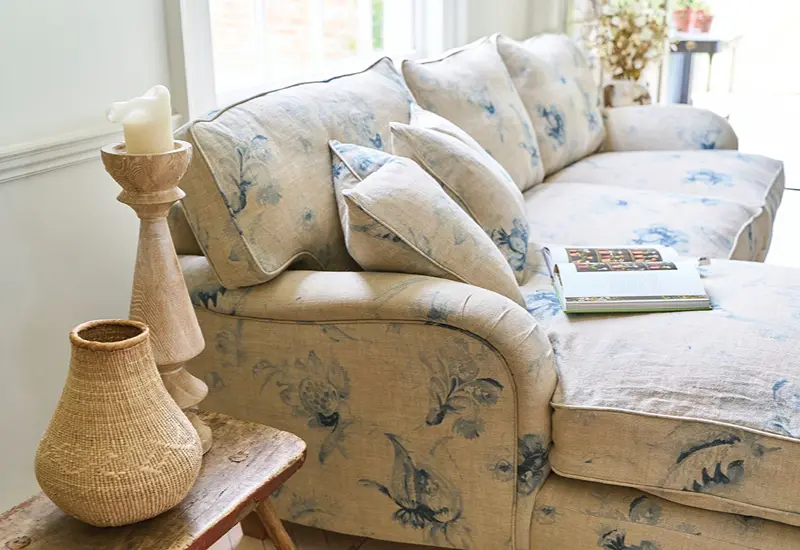
Linen has a relaxed, natural texture that suits casual and coastal-style interiors. It breathes well, which is useful in warm climates. However, linen creases easily and isn’t the strongest against heavy daily use. It’s better suited to low-traffic sofas.
Velvet
Velvet gives a soft, plush feel and a rich appearance that works well in modern and luxury interiors. Good quality velvet, especially performance velvet, can be surprisingly durable. Cheaper velvet crushes and sheds over time, so quality matters more here than with most fabrics.
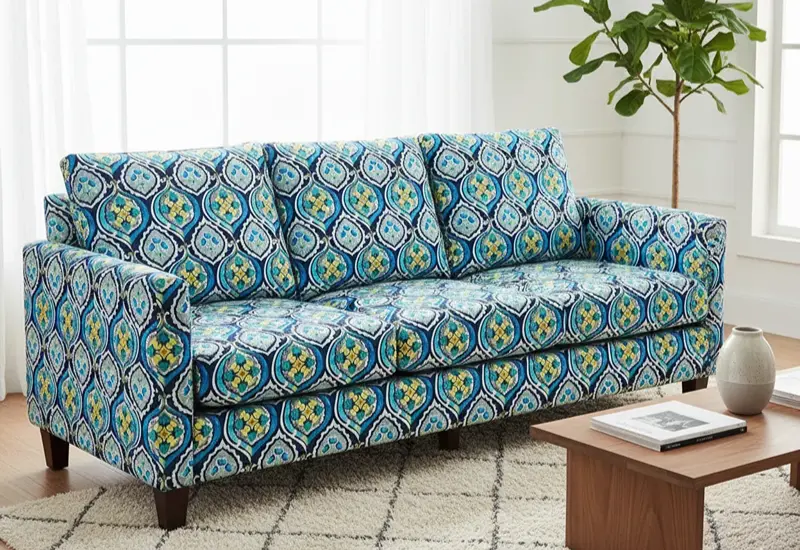
Leather
Leather is a classic choice for durability. It resists spills better than most fabrics since liquid sits on the surface rather than soaking in. It ages well and develops character over time. The trade-off is cost, and leather can feel warm to sit on during hot weather unless the room is air-conditioned.
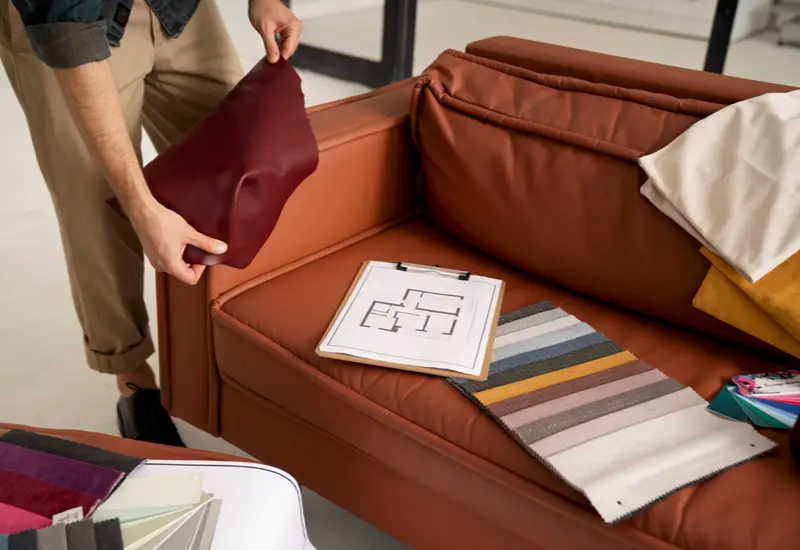
Polyester
Polyester is a synthetic fabric known for holding up against wear, resisting fading, and staying reasonably affordable. It’s a common choice for family sofas because it handles daily use without much fuss. It doesn’t always feel as soft as natural fibres.
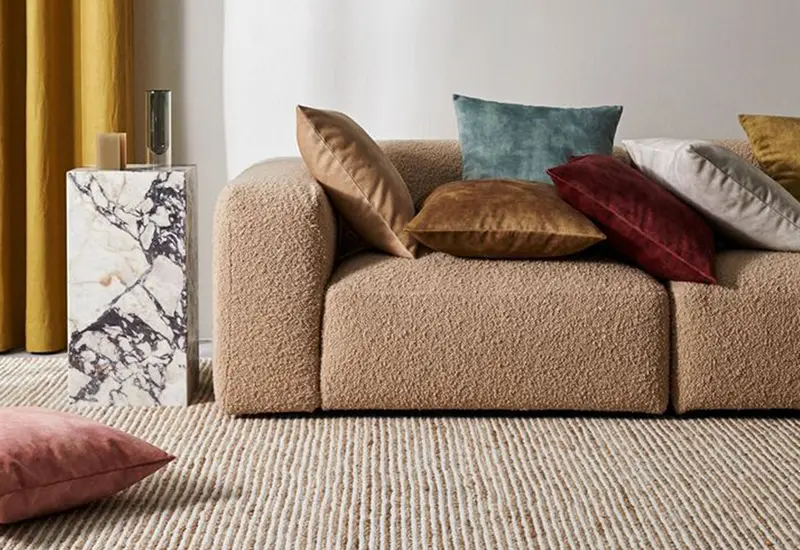
Microfiber
Microfiber is a tightly woven synthetic fabric that resists stains and is easy to wipe clean. It’s a practical pick for households with kids or pets. Some people find it less breathable in warm weather, so it’s worth checking how it feels before committing.
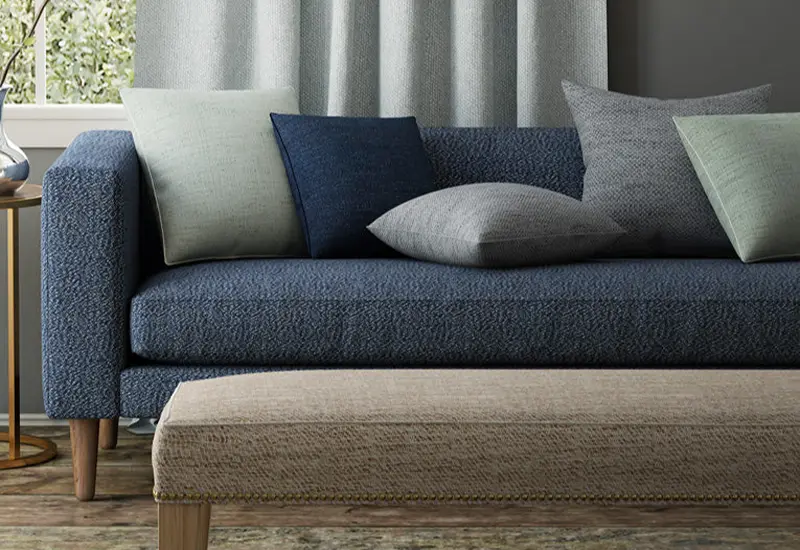
Blended Fabrics
Many sofa fabrics today combine natural and synthetic fibres, such as cotton-polyester or linen-blend fabrics. Blends aim to bring together the comfort of natural fibres with the strength of synthetic ones. This is often a practical middle ground if you can’t decide between the two.
Natural fabrics like cotton and linen tend to feel better against skin and look more organic. Synthetic fabrics like polyester and microfiber tend to last longer and resist stains better. Neither side is automatically the right choice. It depends on how the sofa will be used.
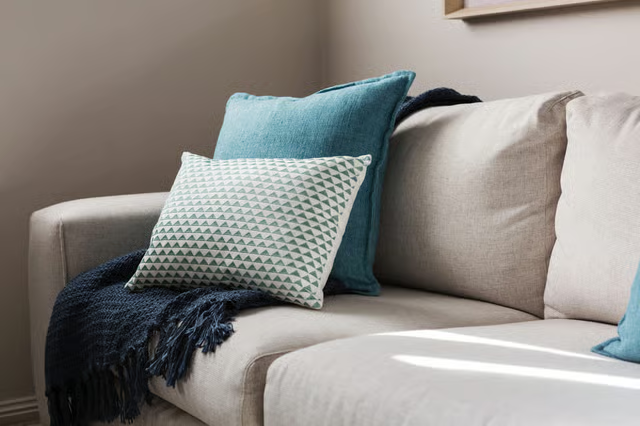
Check Fabric Durability
Durability isn’t just about the fabric type. It’s also about how tightly the fabric is woven.
Look for a rub count, sometimes called the Martindale rating. This number tells you how many rubs the fabric can withstand in lab testing before it starts to wear. For a home sofa with regular use, look for something in the 15,000 to 30,000 range. For heavy daily use or a commercial setting, go higher.
A tighter weave generally means a stronger fabric. Hold the fabric up to light. If you can see through it easily, it’s likely to wear out faster than a denser weave.
Consider Comfort and Texture
You’ll be sitting on this fabric for years, so comfort matters as much as looks.
Some fabrics feel cool to the touch, which is pleasant in a hot climate. Others feel warm and cosy, better suited to cooler evenings. Bring a sample home and actually sit with it against your skin before deciding. A fabric that looks great in a photo can feel scratchy or stiff in real life.
If anyone in the household has sensitive skin, this step matters even more. Rougher weaves like some linens or boucle fabrics aren’t comfortable for everyone.
Choose a Colour That Works
Colour affects both mood and practicality.
Lighter colours make a room feel open and airy, but they show stains and dust faster. Darker colours hide daily wear better but can absorb more heat if the sofa sits near a sunny window.
Neutral tones like beige, grey, and taupe are popular for a reason. They’re easier to match with changing decor and don’t show marks as obviously as pure white or black.
If you have young children, a mid-tone shade with a slight pattern or texture is often more forgiving than a plain, solid colour.
Think About Patterns and Prints
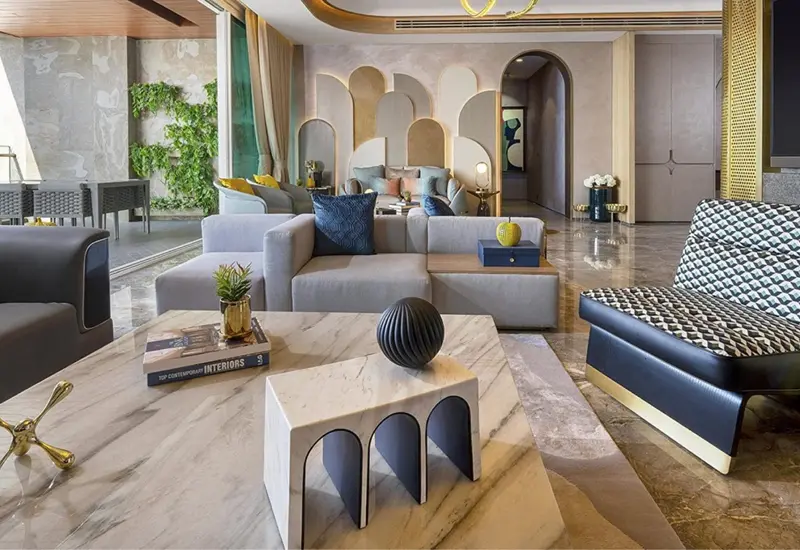
Patterns can hide minor stains and wear better than solid colours. A subtle texture or small-scale print is practical for busy households.
Bold, large-scale patterns make a strong style statement but can date faster and limit how you style cushions and throws around them. If you’re unsure, choose a textured solid fabric for the sofa itself and bring in a pattern through cushions instead. It’s easier to change cushions than reupholster a whole sofa.
Consider Your Home’s Interior Style
Your fabric choice should feel connected to the rest of your home, not separate from it.
Modern UAE interiors often lean toward clean lines, neutral palettes, and a mix of natural and synthetic textures. Velvet and boucle suit contemporary spaces. Linen and cotton blends fit relaxed, casual homes. Leather works in both traditional and modern settings, depending on the tone and finish.
Walk through your space and note the materials already present, such as flooring, wood tones, and existing furniture. The sofa fabric doesn’t need to match exactly, but it should sit comfortably within that existing palette.
Choose Fabric for Your Lifestyle
Think honestly about how you live, not how you’d like to live.
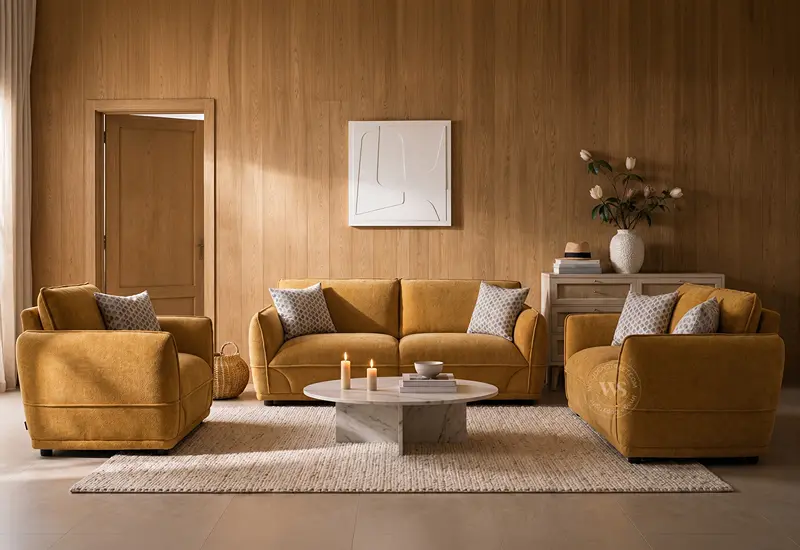
If you entertain often, a stain-resistant fabric saves stress. If you work from home and the sofa doubles as a daytime seat, comfort and breathability matter more. If the sofa is mostly for show in a formal sitting area, you have more freedom to choose delicate fabrics like silk blends or fine linen.
There’s no universally “best” fabric. The best fabric is the one that matches how your household actually uses the furniture.
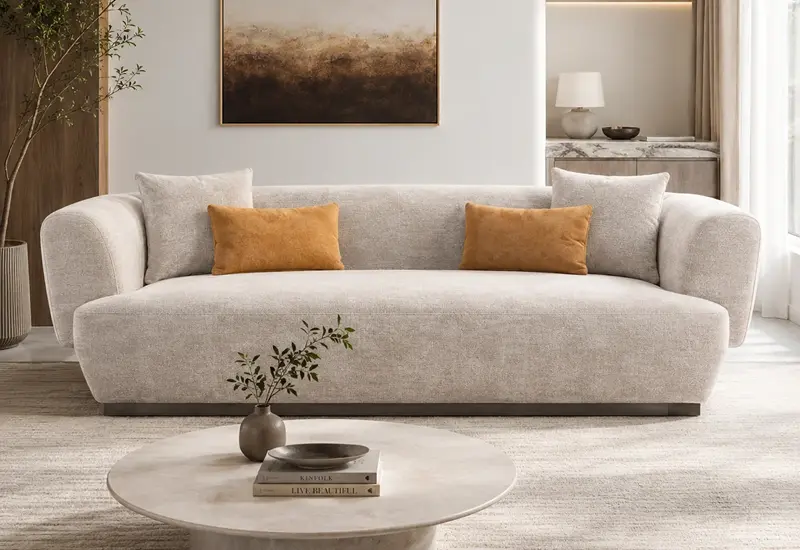
Think About Children and Pets
Households with kids or pets need fabric that can handle spills, scratches, and general roughhousing.
Performance fabrics, microfiber, and treated polyester are strong choices here. They resist stains and are easier to clean without special products. Avoid delicate silks, loosely woven linens, and light-coloured velvets if pets are part of the household, since pet hair and claws can damage softer weaves quickly.
Leather is worth considering too. It doesn’t hold pet hair the way fabric does, and scratches can often be buffed out or conditioned away.
Indoor air conditioning also plays a role. Fabrics that trap heat, like heavier velvets, might feel less comfortable in rooms with inconsistent cooling.
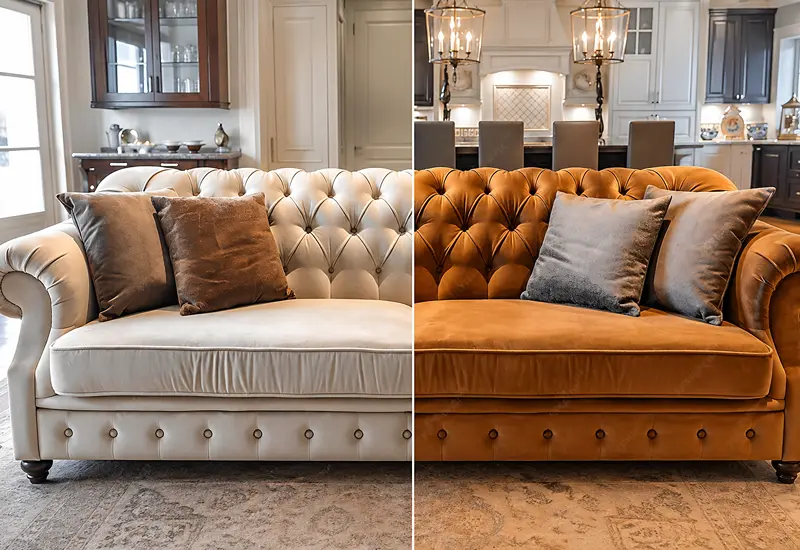
Compare Fabric Quality and Price
Higher price doesn’t always mean better quality, but very cheap fabric almost always means shorter lifespan.
When comparing fabric options, check the thread count and weave tightness, not just the price tag per metre. A well-made mid-range fabric will usually outlast a low-cost fabric that looks similar in the showroom.
Think about cost per year of use rather than upfront cost alone. A fabric that costs more but lasts twice as long is often the better value, especially for a sofa you plan to keep for years.
Consider Sofa Upholstery in Dubai
If you already own a sofa with good bones, a solid frame, and comfortable cushioning, reupholstering it can be more practical than buying new. Sofa upholstery in Dubai has become a common choice for homeowners who want to refresh an old sofa’s look without replacing the entire piece, especially with the wide range of fabric options available locally.
This route works well when the frame is still sturdy but the fabric has worn out, faded, or simply doesn’t match a redecorated space anymore. A good upholsterer can also adjust cushion firmness and fix sagging support at the same time, which effectively gives you a like-new sofa at a fraction of replacement cost.
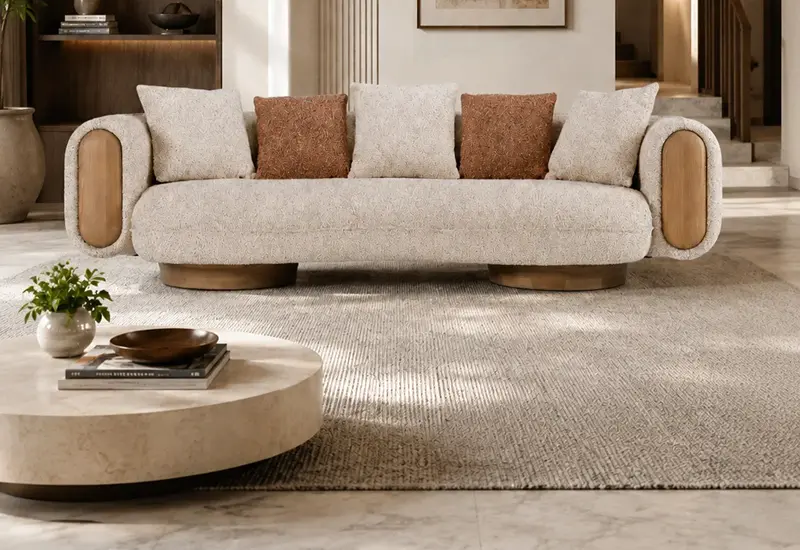
Final Tips for Choosing Sofa Fabric
- Match the fabric to how the sofa is actually used, not how you imagine using it.
- Check the rub count for durability, especially for family sofas.
- Test samples at home under real lighting before deciding.
- Consider dust and sun exposure if you live in a sunny or dusty part of your home.
- Balance natural comfort against synthetic durability based on your household.
- Don’t skip the cleaning code. It tells you what maintenance you’re signing up for.
- If reupholstering, check the frame condition first and get accurate measurements before ordering fabric.
Related Articles